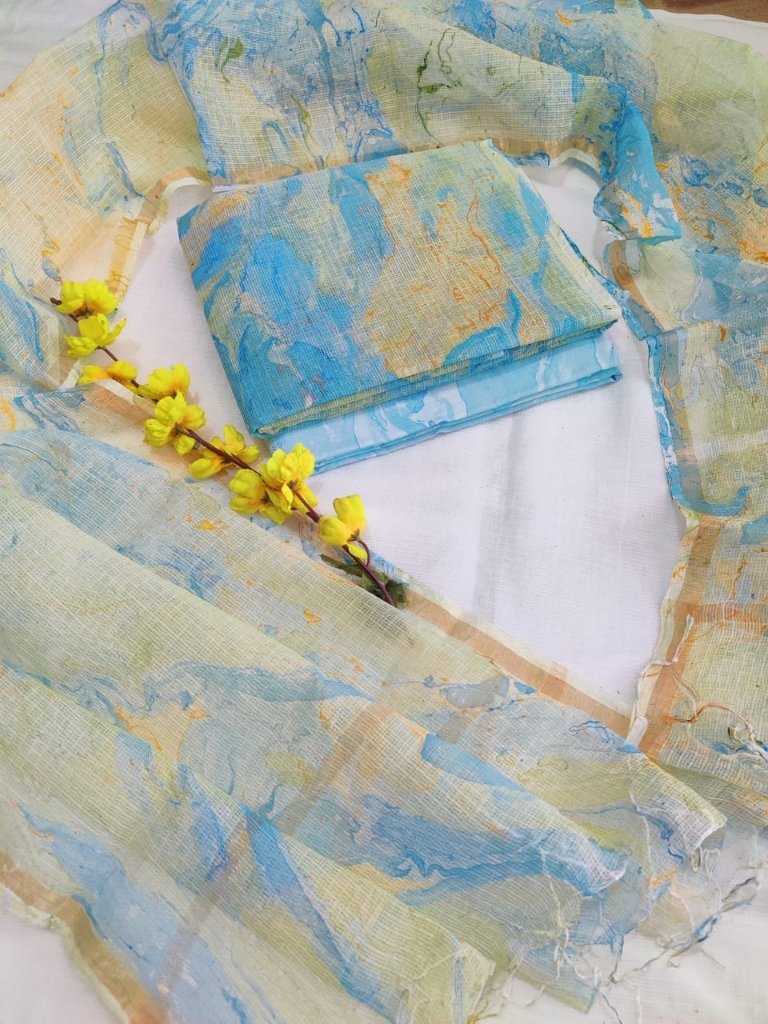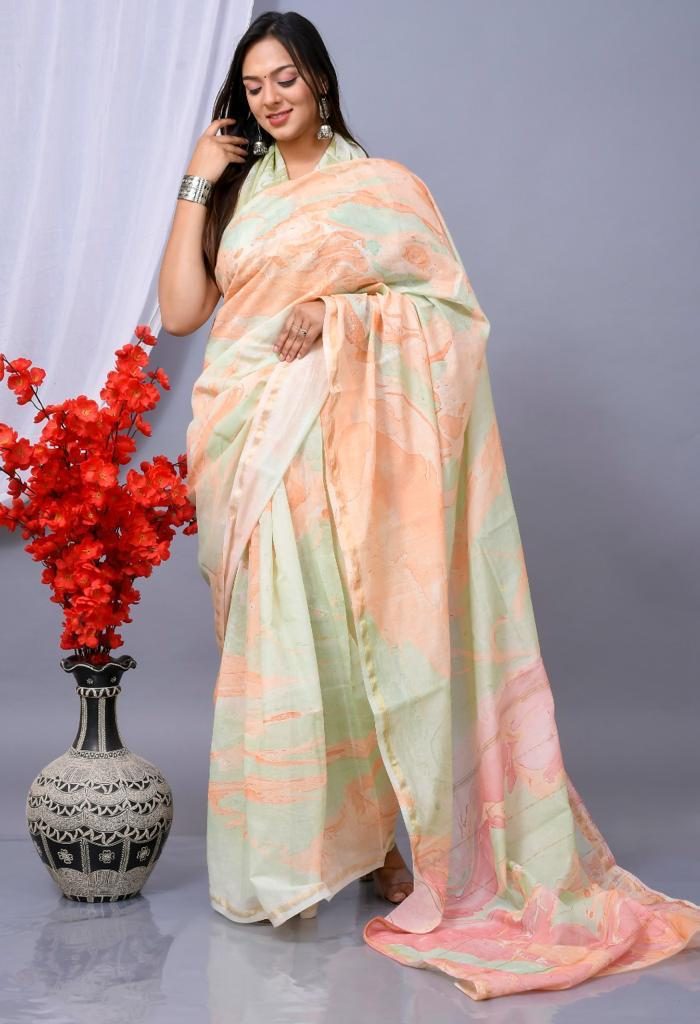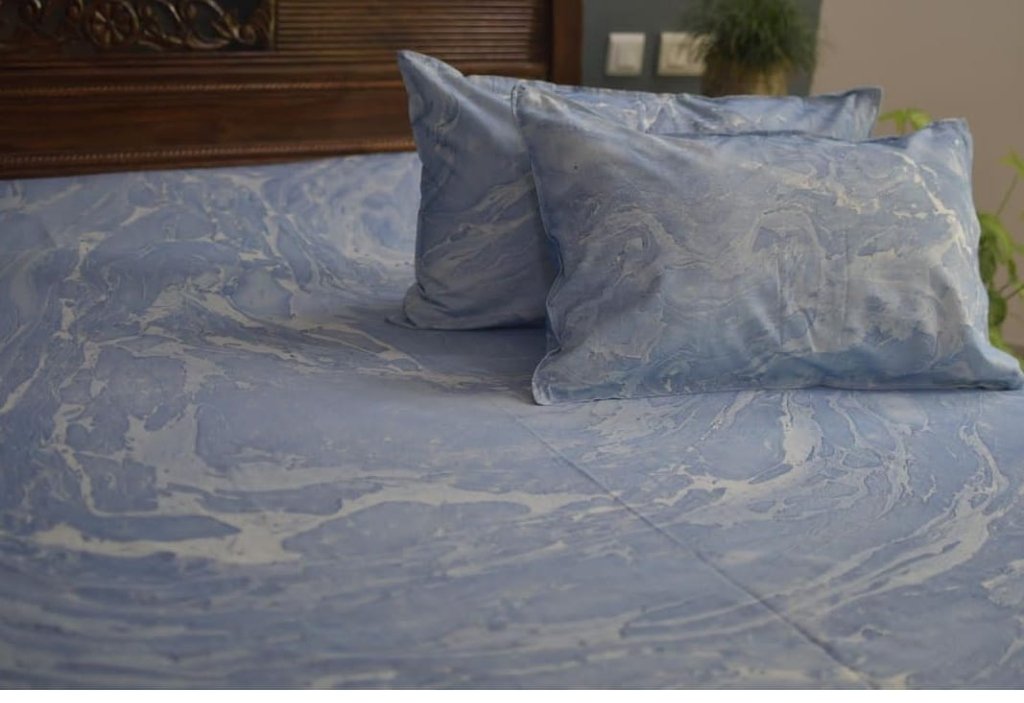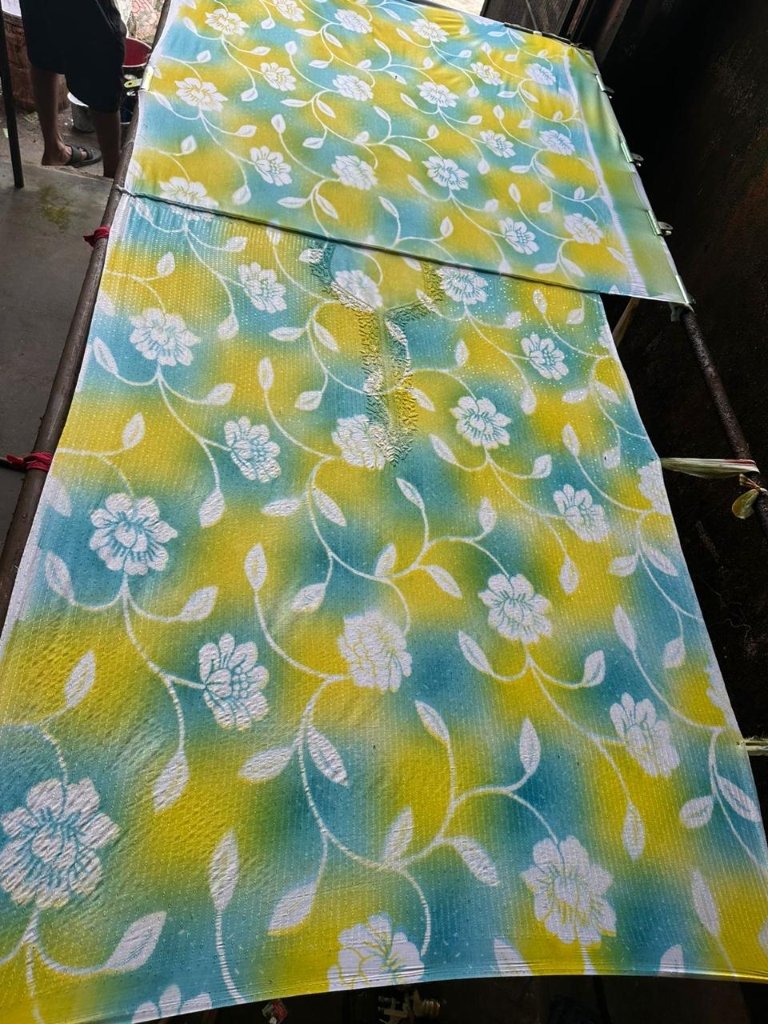
When fashion designers in Jaipur, Mumbai, and Delhi specify ombre gradients and atmospheric cloud textures for their festive collections, they often deliberate between spray printing and digital printing. Here is our direct factory comparison based on 25+ years of daily production runs.
Breathability & Hand Feel
Digital reactive and pigment printers deposit heavy pre-treatment binders on the textile surface, which can stiffen lighter mulmuls and pure chiffons. Spray printing, by contrast, uses microscopic pneumatic atomization that gently diffuses liquid dyes into the yarn fibers, leaving the natural weave soft and airy.
Gradient Softness
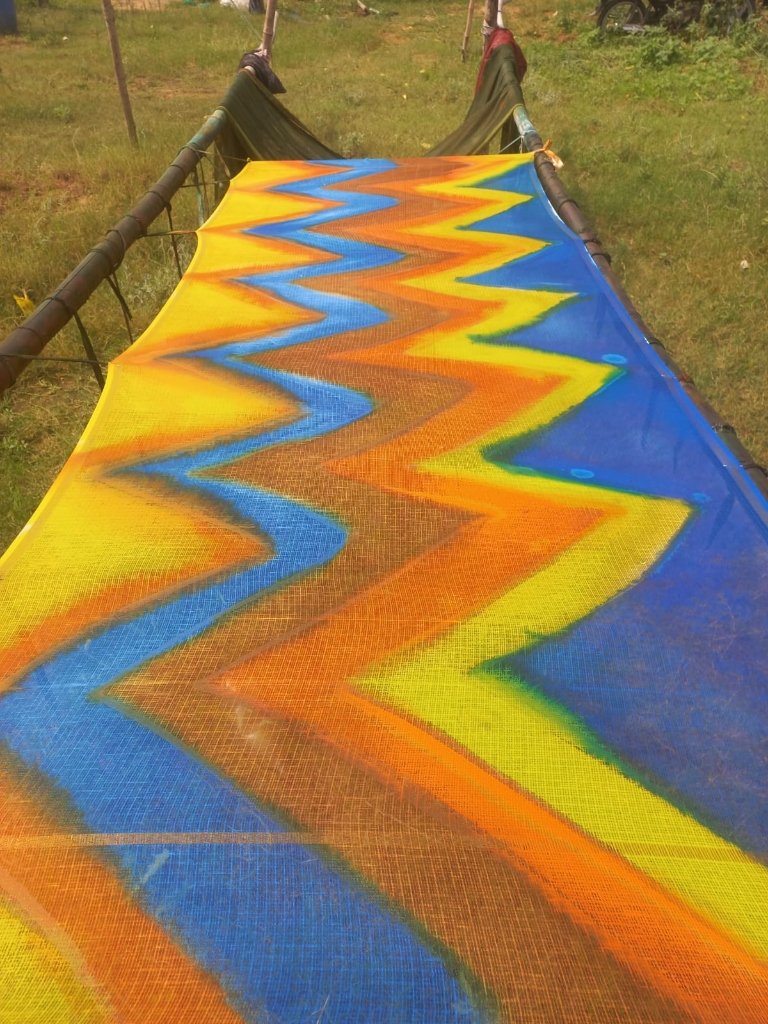
While digital printing relies on halftoning dots (DPI), spray printing creates genuine analogue gradient mists with no visible dot matrix even under 10x magnification. This is especially magnificent for couture gowns and sweeping royal dupattas.
Require a Custom Fabric Strike-Off?
We manufacture custom strike-off samples based on your design, shade reference, and fabric choice (Cotton, Mulmul, Silk, Chanderi, Rayon) within 48 hours.
Contact Workshop for SamplingWritten by Gaurav Singh
Founder of Gaurav Marble Print with over 25 years of generational expertise in Rajasthani water marbling, spray gradients, and crackle resist printing in Sanganer, Jaipur.